If you have ever tried to set up a home WiFi router, there is a good chance you have typed something into your browser that looks like an IP address. Most people enter numbers like 192.168.0.1 or 192.168.1.1 because they are common router login pages. However, every now and then, you will see a unique address like 192.16815.1, and it can cause confusion. Many users wonder whether it is a real login address, why it appears in guides, and how it relates to router settings. This article breaks everything down in simple, human language. You will understand what 192.16815.1 means, why people search for it, and how it connects to the process of accessing your router settings. Before we go deeper, let me share a quick story. A friend of mine, Ali, called me one evening when his WiFi stopped working during a cricket match livestream. He said, “I keep typing 192.16815.1, but nothing opens.” He thought his router was broken. When I asked him where he got the number from, he sent me a picture of a scribbled note stuck under the router. Someone had written the wrong IP address years ago, and he had been trying it ever since. This small moment explains why many people get confused by IP addresses. It only takes one typo to break the whole process. With that in mind, let’s explore the world behind 192.16815.1.
What Is 192.16815.1
The number 192.16815.1 looks like an IP address but does not follow the standard four-octet format used in local networks. Real private IP addresses follow this pattern: 192.168.x.x 10.x.x.x 172.16.x.x to 172.31.x.x Each section is separated by dots. In contrast, 192.16815.1 merges two blocks together. Because of this, many devices do not recognize it as a valid IP address. Still, users often see it in online guides or printed labels, usually due to simple formatting mistakes. Even though 192.16815.1 is not technically correct, it leads people to search for router login help. So, understanding the correct alternatives becomes important. Most routers that show mistakes like this usually intend to use one of these: 192.168.15.1, 192.168.1.5, 192.168.1.15, 192.168.0.1, 192.168.1.1. Because many users still search for 192.16815.1, this article treats it as a reference point to the router login process itself. So even though the number is incorrect, the steps and troubleshooting methods you will learn apply to your actual home router.
Why People Search for 192.16815.1
A surprising number of people type 192.16815.1 into Google. You might wonder why. The answer usually comes down to these reasons: 1. Typographical Error Many users mistype the correct IP address. Missing a dot is one of the most common mistakes. A single missing dot creates a completely different string. 2. Misprinted Router Stickers Some older or cheaper routers occasionally print the IP address without proper spacing. When you see “192.16815.1” on a faded sticker, it is easy to assume it is the login address. 3. Copy-Paste Errors in Online Guides Some websites copy incorrect versions of the number from earlier articles, spreading the mistake even further. 4. Confusion Due to Similar IP Ranges Different router brands use different default IPs. So anyone switching from one router brand to another simply tries any number they remember, including 192.16815.1. 5. Lack of Technical Knowledge People assume any number starting with “192” must be correct. This leads them to try multiple variations. Understanding these reasons helps you realize that the issue is not with you. It’s a common problem faced by thousands of users every day.
How Router Login Normally Works
Even though 192.16815.1 may not function as a login page, learning the proper way to access your router helps you resolve issues quickly. Here is how the process usually works in most homes. A router assigns private IP addresses to all devices. These addresses are not visible to the outside world. The router itself also has an internal IP address that acts as the control center. When you type that address into your browser, you reach the admin dashboard. That dashboard lets you: change WiFi name, change WiFi password, update router firmware, block unknown devices, adjust parental controls, manage bandwidth settings. If you enter a wrong IP like 192.16815.1, the browser will simply show an error instead of opening your router dashboard.
Correct IP Addresses You Should Try Instead of 192.16815.1
Here are the most common router login addresses you should test: 1. 192.168.1.1 Used by TP-Link, Asus, D-Link, Huawei, and many more. 2. 192.168.0.1 Used by older D-Link and Netgear routers. 3. 192.168.100.1 Used by fiber modems like PTCL, Spectrum, and ONT devices. 4. 192.168.15.1 Used by some Motorola, Linksys, and Belkin routers. Many people typing 192.16815.1 were actually trying to type 192.168.15.1. So this one is especially important.
Step-by-Step Guide: What to Do If 192.16815.1 Does Not Work
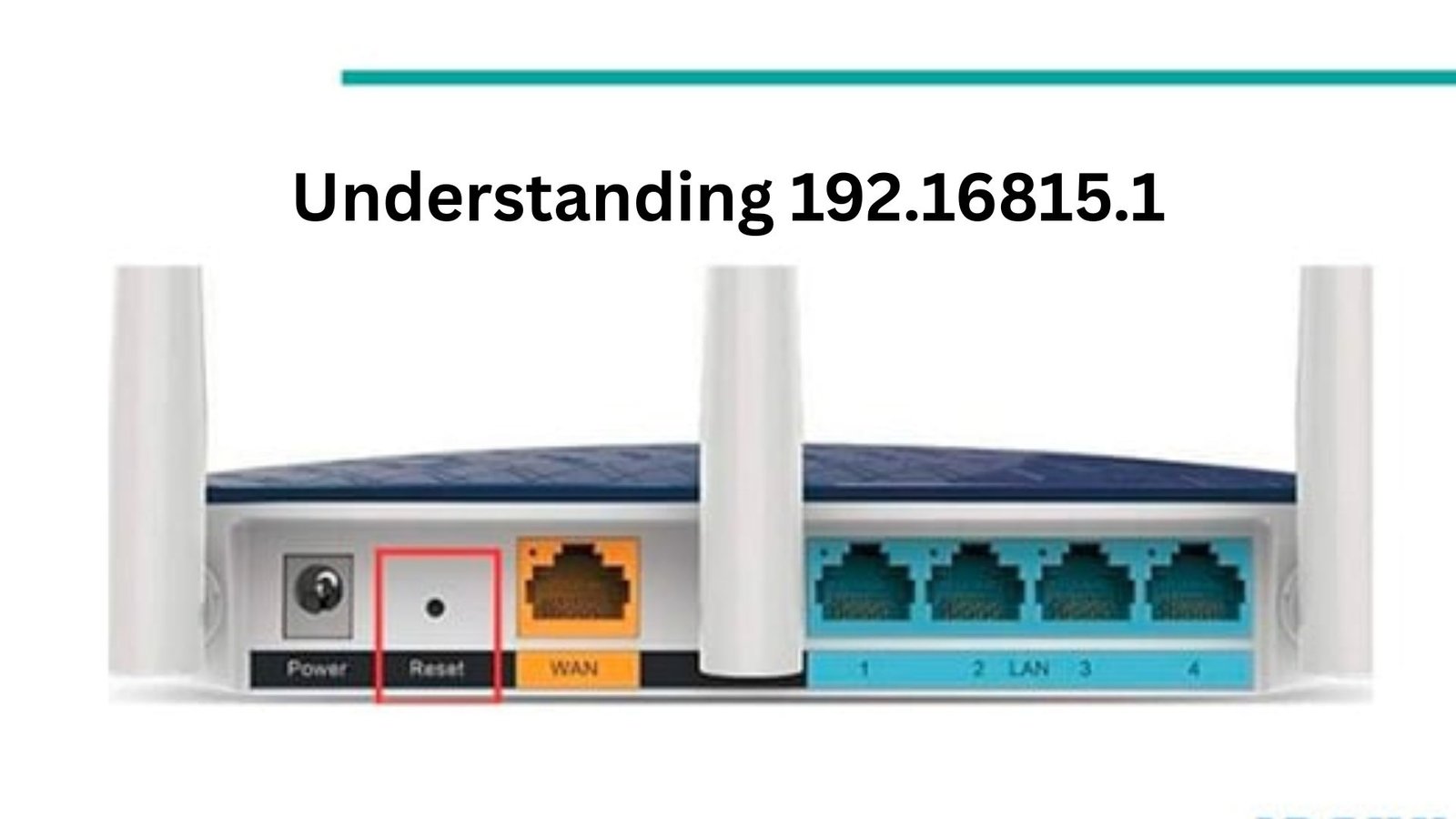
Here is the part most people find helpful. Follow these steps one by one. Step 1: Check the Router Sticker Turn your router around and look for a sticker. It will show something like: default IP, username, password, model number. If the sticker shows something that looks like 192.16815.1, try reading it carefully. Many stickers have faded dots. Step 2: Use the Command Prompt (Windows) Press Windows Key + R → Type cmd → Press Enter → Type ipconfig → Look for “Default Gateway.” Whatever number you see is your real router login address. Step 3: Try Common IP Combinations If the sticker is unclear, try these in your browser: 192.168.1.1, 192.168.0.1, 192.168.15.1, 192.168.100.1. Avoid typing 192.16815.1 because it will most likely not work. Step 4: Make Sure You Are Connected to the Router Many users try accessing their router while using mobile data. Make sure your device is connected to the router WiFi. Step 5: Restart the Router A simple restart can bring your router back to life. Turn it off, wait 10 seconds, turn it back on. Step 6: Reset the Router (Last Option) If nothing works, press the reset button for 10 seconds. This restores the factory settings. After that, the default login IP (not 192.16815.1) will work.
Common Problems People Face With 192.16815.1
Here are some common issues that lead people to search for solutions: 1. “This site can’t be reached” Error Happens when the IP is wrong. 2. Browser Keeps Loading Forever Usually caused by a network disconnect. 3. IP Address Redirects to Another Page Happens when you type 192.16815.1, and the system reformats it incorrectly. 4. Router Does Not Respond The router might be frozen or outdated. 5. Wrong Username or Password Default usernames are usually admin, user, root. Default passwords are admin, password, 1234.
Anecdote: The Cafe WiFi Incident
Last month, I visited a small cafe in Lahore. The owner asked me to help fix their WiFi because customers kept complaining. He handed me a sticky note that had 192.16815.1 written on it. I smiled because I had seen the same mistake many times. When I asked where the number came from, he said the previous technician wrote it while rushing out the door. I showed him the correct IP (192.168.15.1), and the login page opened instantly. The owner laughed and said, “So this whole time it was because of one dot?” I replied, “Yes, technology is simple; we just make it complicated.” That moment perfectly captures the confusion around these numbers.
Understanding Private IP Ranges (Explained Simple)
To understand why 192.16815.1 is incorrect, let’s break IP ranges down in the easiest way possible. Your home network uses private IP ranges. These are numbers reserved for local devices. They do not exist on the open internet. They only work inside your house. The popular private ranges are: 192.168.x.x, 10.x.x.x, 172.16.x.x – 172.31.x.x. Every device on your network gets a number from one of these. The router also gets one so you can manage it. But the format always has four parts separated by dots. 192.16815.1 merges two parts, making it unreadable by your device.
Advanced Troubleshooting (For Those Who Want Extra Control)
Some readers want deeper steps, so here’s a more advanced section. 1. Ping Your Router Open Command Prompt → Type: ping 192.168.1.1. If you get replies, that is your router IP. 2. View Your Network Map In Windows: Control Panel → Network and Sharing Center. You will see your router name. 3. Check Your DHCP Range Your router may be using: 192.168.15.x or 192.168.0.x. Knowing this helps in identifying the correct login IP. 4. Use Mobile Settings On Android: Settings → WiFi → Tap your connection → See “Gateway.” This gateway is your real address, not 192.16815.1.
Final Thoughts
Even though 192.16815.1 is not a standard or valid router login IP, people still encounter it because of printing mistakes, copying errors, or simple typos. Once you understand how router login addresses actually work, the confusion becomes easy to fix. With the guidance above, you can confidently troubleshoot your network, find the correct IP, and access your router admin settings. Mistakes like 192.16815.1 teach us something important: technology often becomes confusing not because it is complex, but because small details matter. A missing dot can break a connection, a faded sticker can cause hours of confusion, and an incorrect guide can send you in circles. But once you understand the correct method, everything becomes simple. If you want, I can also create a shorter version, FAQ section, infographic, or comparison table—just tell me.
