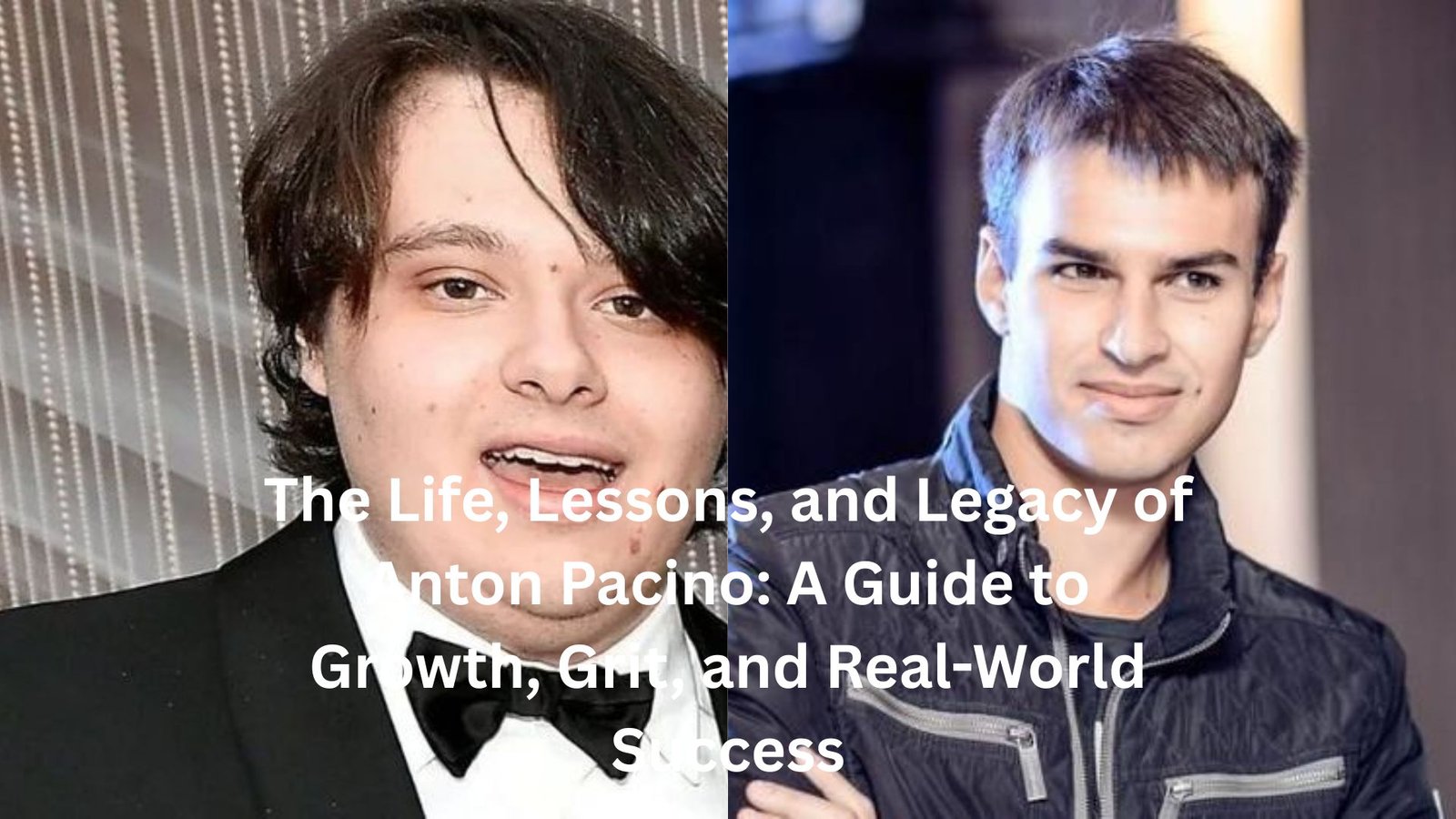
People want stories that help them grow, improve, and move forward. The story of Anton Pacino delivers exactly that. It shows how an ordinary person can rise through persistence, creativity, and a commitment to doing things the right way. His journey mirrors the challenges most people face, which is why learning about Anton Pacino is both inspiring and useful.
This article walks through his background, turning points, principles, and the steps anyone can apply to improve their own life or work. The language stays simple, the lessons stay clear, and the path forward is easy to follow.
Who Is Anton Pacino?
Before we look at the lessons, it helps to understand who Anton Pacino is. Known for being grounded yet ambitious, he built his success through curiosity and steady effort. Even as a kid, he had a habit of taking things apart just to see how they worked. If something broke in the neighborhood, Anton would be the first to try fixing it.
He did not become skilled overnight. He learned by trying, failing, and trying again. Over time, this created the mindset that shaped his entire journey.
Anecdote: The Radio That Wouldn’t Work
One of the most repeated stories about Anton Pacino happened when he was about ten. A neighbor handed him an old radio that had been dead for years. Almost everyone saw it as trash. Anton saw it as a challenge.
He spent two afternoons pulling it apart, taking notes, and studying the pieces one by one. On the third day, the radio crackled back to life. The neighbor was stunned. Anton simply said, “It made sense once I slowed down enough to understand it.”
That moment shaped a belief he carries to this day. When you understand the problem deeply, solutions start to show themselves.
What Makes Anton Pacino Different?
People often ask what sets Anton Pacino apart. It usually comes down to three qualities:
- Patience in learning
- Creativity in problem solving
- Consistency in action
These qualities allowed him to handle challenges and build strong long-term habits.
Lesson 1: Patience Creates Clarity
Patience is not passive. It is active and intentional. Anton Pacino learned that rushing leads to mistakes and confusion. He approached every project slowly enough to see the moving parts clearly.
How You Can Use This:
Step 1: Define the real problem
Write your challenge in one sentence.
Step 2: Break it into pieces
List the smaller parts, like Anton did with the radio.
Step 3: Look for what is missing
Sometimes the missing detail reveals the entire solution.
Step 4: Move slowly but consistently
Small steps add up faster than rushed sprints.
Lesson 2: Creativity Comes From Curiosity
Creativity is not a special talent. It grows from curiosity. Anton Pacino learned to ask simple questions that opened new possibilities.
A Story That Shows This
During one early project, Anton hit a wall. Nothing worked. Instead of quitting, he asked, “What am I assuming that might be wrong?”
That single question changed everything. He realized he wasn’t using the wrong idea, but the wrong tool. Within an hour, the project was back on track.
How You Can Build Creativity:
- Ask at least five questions before solving anything.
- Look at examples from outside your field.
- Combine two unrelated ideas.
- Try the opposite of what feels normal.
- Allow yourself to be wrong.
Curiosity turns creativity into something natural, not forced.
Lesson 3: Consistency Beats Perfection
If Anton Pacino lives by one rule, it is this: consistency wins. Perfection slows people down, but consistency moves them forward.
Why Consistency Works:
- It builds momentum.
- It removes fear of failure.
- It gives constant feedback.
- It trains discipline.
None of Anton’s skills grew quickly. They grew because he showed up every day, no matter what.
How Anton Pacino Sets Goals
Anton Pacino keeps goals simple and structured. Instead of chasing dozens of ideas, he focuses on one important goal at a time.
His Method:
Step 1: Start with a vision
Imagine the result you want.
Step 2: Choose one key objective
Keep it focused.
Step 3: Break it down
Create monthly, weekly, and daily actions.
Step 4: Remove distractions
Anything that does not help you move forward gets cut.
Step 5: Review weekly
Adjust your plan as needed.
Anecdote: The Bridge Moment
During one difficult project, Anton Pacino reached a point where he wanted to quit. Progress was slow and discouraging. One evening he met an older man on a small bridge near his home.
Anton explained his frustration. The man listened, then said, “This bridge exists because someone laid one plank at a time. None of them looked important, but together they carry everyone who walks across it.”
That message reminded Anton that progress often looks invisible until the results stack up.
Practical Steps You Can Take
Here is a simple checklist inspired by Anton Pacino:
1. Build a daily habit
Choose one habit and repeat it every day.
2. Track your progress
Small checkmarks create momentum.
3. Reflect at night
Ask: What worked? What slowed me down? What can improve tomorrow?
4. Protect your time
Reduce distractions.
5. Stay curious
Experiment and keep learning.
6. Stay patient
Growth takes time.
How Anton Pacino Handles Setbacks
When setbacks happen, Anton Pacino asks three questions:
- What actually happened?
- What part was under my control?
- What can I learn from this?
This removes blame and turns mistakes into useful data.
Why People Connect With Anton Pacino
People relate to Anton Pacino because he represents real growth, not lucky breaks. His story is about steady progress, simple habits, and clear thinking. His message resonates because he shows that anyone can reshape their life with the right approach.
A Step-by-Step Guide You Can Use
Step 1: Define your goal
Write it in one sentence.
Step 2: Identify why
Strong reasons create strong motivation.
Step 3: Make a simple plan
Break it into weekly actions.
Step 4: Start small
Begin with steps you cannot fail.
Step 5: Build consistency
Show up daily or weekly.
Step 6: Track progress
Stay honest and celebrate wins.
Step 7: Adjust when needed
Flexibility keeps you moving.
Step 8: Stay patient
Trust the long game.
Step 9: Stay curious
Keep learning and exploring.
Step 10: Never stop moving
Even on tough days, take one small step.
Final Thoughts
The story of Anton Pacino shows that success is built, not gifted. With patience, curiosity, and consistency, anyone can create meaningful progress. You don’t need perfect conditions. You just need to start, keep learning, and give yourself the time to grow.
If you want this rewritten for a website, a profile page, a more emotional tone, or a more professional tone, I can adjust it for you.
