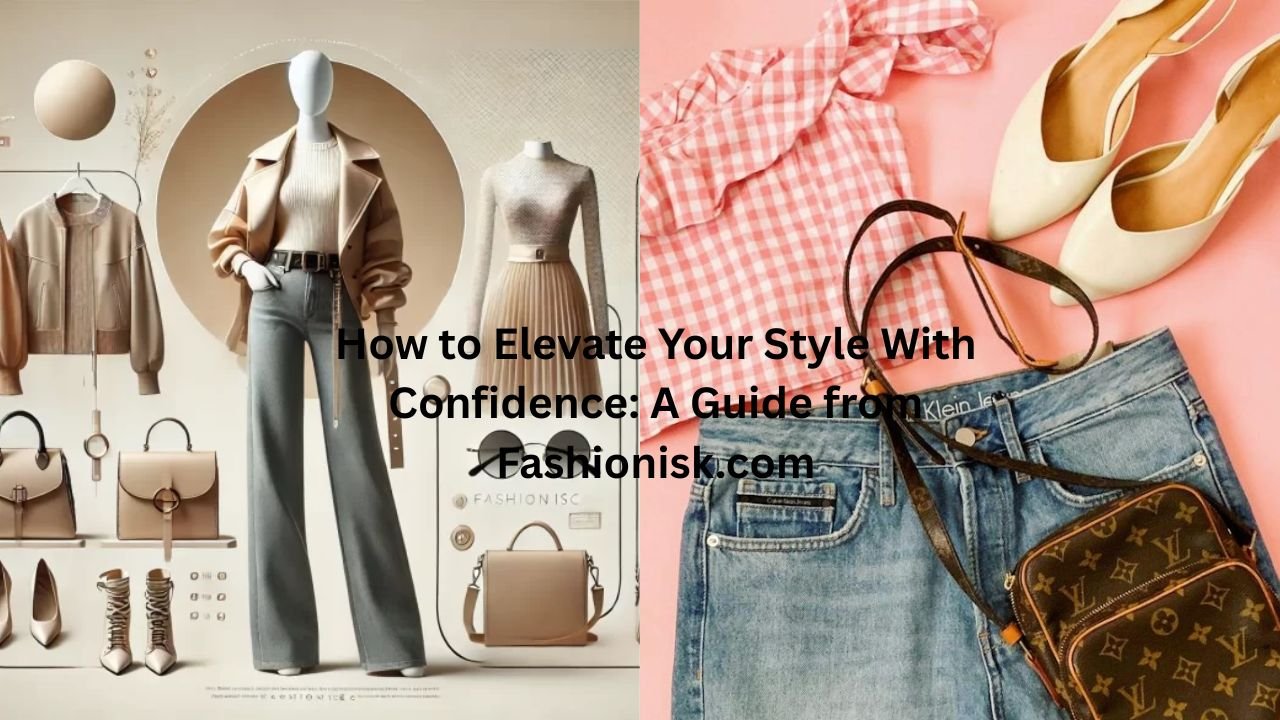
Introduction
Have you ever opened your closet, looked at your clothes, and felt stuck? Like you should look more put‑together, but you just don’t know where to start? I’ve been there. Last year I had an event and tried on three outfits in a row—but nothing felt right until I stepped back, looked at what truly suited me, and made adjustments. That moment reminded me: style isn’t just about clothes. It’s about confidence, self‑expression, and smart choices.
In this detailed piece for Fashionisk.com, we’ll explore how you can build a wardrobe that works for you, discover the current trends that matter, and follow a hands‑on, step‑by‑step guide to craft your personal look. Along the way you’ll find anecdotes, practical tips, and transitions that make everything flow. Whether you’re just starting out or want to sharpen your style game, this is for you.
What we’ll cover:
- Why personal style matters (and how to find yours)
- Current trends worth knowing
- Keyword‑rich topics like fashion trends, style guide, wardrobe essentials, outfit ideas, personal style tips
- A step‑by‑step process you can follow
- Real‑life anecdotes and insights
- Common mistakes and how to avoid them
Let’s dive in.
1. Why Your Personal Style Matters
First, let’s talk about why your style really matters. You might think “It’s just clothes”—but it’s more than that.
Your personal style communicates who you are without saying a word. When you walk into a room, your outfit gives people clues. It’s not vanity—it’s part of your identity. For example: I once worked with a friend who wore only black and grey. He thought it looked “safe”. But after he added a pop of colour (a deep burgundy scarf) he told me “This feels more me” and said people seemed more at ease around him. That single change boosted his confidence.
Furthermore, embracing your style can save you time and money. Instead of randomly buying things, you start buying what fits your ethos. Instead of being overwhelmed by “what to wear”, you already know your go‑to pieces.
On Fashionisk.com, we believe in helping you uncover the style blueprint that’s comfortable and expressive. So before chasing every trend, you’ll want to anchor yourself.
1.1 How to find your style
Here are practical questions to ask yourself:
- What colours make me feel good when I look in the mirror?
- Which outfits get compliments? (Even if you thought “just okay” in them.)
- What clothes do I avoid because they don’t feel like me?
- What style icons or people do I admire, and why?
Transitioning from random picks to intentional pieces gives you a foundation. Once you’ve got that, you’ll be much more ready to incorporate trends and outfit ideas.
2. Exploring Current Fashion Trends
Let’s talk about what’s hot in style right now. Trends come and go, but understanding them helps you decide which ones resonate and which ones you can skip.
2.1 Key trends for today
Here are a few trends catching attention:
- Bold primary colours paired with neutral tones. Imagine a bright cobalt jacket over beige trousers. It stands out, yet stays grounded.
- Sustainable and ethical fashion. More brands now focus on eco‑friendly materials and transparent supply chains — a shift visible on trend‑setting blogs.
- Mix of high and low pieces. You can pair a budget‑friendly tee with a statement blazer and it works. It’s not about cost—it’s about balance.
- Comfort as design. Especially since remote work grew, relaxed silhouettes (wide‑leg trousers, loose knitwear) are in, not just skinny styles.
- Accessorising transformed: Think oversized earrings, layered necklaces, bold bags instead of just shoes.
2.2 How to pick trends that suit you
Not every trend is for everyone. Here’s how to choose:
- If you have a classic wardrobe already, pick one trend per season to test.
- If you’re unsure, start small: a trendy scarf, a new handbag, a fresh colour in your palette.
- Always check: does this trend fit your lifestyle? For example, if you rarely attend formal events, maybe skip the ultra‑glam sequins for now and focus on elevated casual.
- Mix trends with wardrobe essentials (more on those next) so your style stays timeless.
I remember one summer I bought a neon green dress because “everyone’s doing it”. I wore it once, felt uncomfortable, and never touched it again. Lesson: a trend without connection to your personal style becomes just a regret‑buy.
3. Building Your Wardrobe Essentials
Now we move into the hands‑on part. No fluff. Let’s assemble your core pieces, the basics that make styling easier.
3.1 Why wardrobe essentials matter
Imagine your wardrobe as a house: the essentials are the foundation. If the foundation is strong, adding fun pieces is easier. If the foundation is weak, the whole thing wobbles. Essentials help you create reliable outfit formulas. Then you layer trends or statement items over them.
3.2 The essential list
Here’s a basic list. You can adapt it based on your lifestyle (office, casual, creative, etc.):
- A well‑fitting white shirt or blouse
- A pair of dark‑wash jeans (straight or slim or your preferred fit)
- A neutral blazer (navy, grey, black or beige)
- A little black dress (for women) or a versatile suit (for men)
- A quality coat (neutral colour)
- A pair of comfortable sneakers + one pair of dress shoes
- A simple knit or sweater (solid colour)
- A quality handbag or briefcase
- Basic tees in neutral tones
- A belt and a watch
3.3 Step‑by‑step to audit your wardrobe
Let’s go through a simple audit:
- Empty your closet: take everything out. Yes, everything.
- Sort into three piles:
- A = I love it and wear it often
- B = I like it sometimes
- C = I haven’t worn it in 12+ months or I don’t feel good in it
- Focus on A and B. Analyse B: can this become A with a tweak? If not, move to C.
- Review C: ask “Does this fit my personal style (see section 1)?” If no, donate or sell.
- Check gaps: Do you have all essentials listed above? If not, make a short list of 1‑2 items to acquire this season.
- Budget and timeline: Decide whether to buy now or wait for sales. Don’t rush buying everything at once.
By doing this audit, when you open your wardrobe next time you’ll feel more in control than overwhelmed.
4. Creating Outfit Ideas & Putting It All Together
Now the fun part: styling. You’ve found your style, you’ve built your essentials, and you know the trends. Let’s create outfit ideas.
4.1 A formula you can follow
Here’s a simple formula you can adapt:
Essentials base + Trend piece + Accessory = Finished outfit
Example: dark‑wash jeans (essential) + bold colour blazer (trend piece) + oversized earrings (accessory) = chic outfit for an evening out.
4.2 Sample outfit ideas
Here are a few examples:
- Casual day: white tee + dark‑wash jeans + a neutral blazer + sneakers. Accessory: simple necklace.
- Office smart: grey blazer + white blouse + straight‑leg trousers + loafers. Accessory: watch.
- Weekend brunch: solid‑colour knit + midi skirt + ankle boots. Accessory: cross‑body bag and sunglasses.
- Evening event: little black dress + metallic heels + statement clutch. Accessory: bold earrings.
4.3 Transitioning for seasons
As seasons change, you can adjust. For example:
- Autumn: layer a coat over your blazer, swap sneakers for boots.
- Winter: use a chunky knit instead of a blouse.
- Summer: replace knit with lightweight linen, switch boots to sandals.
A friend of mine once bought a vibrant floral skirt (trend) and was unsure how to wear it. We paired it with a plain white tee and denim jacket (essentials) and it looked effortless. She said: “I thought that skirt would be hard to style—but keep it simple and everything else falls into place.”
5. Step‑by‑Step Guide: How to Upgrade Your Style in 30 Days
This guide gives you a calendar to work through. Do one task per week or accelerate if you can.
Week 1: Discover your style
- Day 1: Gather inspiration. Use Pinterest, go through magazines, scroll Instagram, and identify outfits you like.
- Day 2: Answer the questions from Section 1. Write down at least 5 things you like about your current style and 3 things you’d change.
- Day 3: Clean your closet (first part). Take everything out and sort.
- Day 4: Finish sorting into A, B, C piles.
- Day 5: Review your A‑pile. Why do you love each piece?
- Weekend: Reflect. Try wearing one piece from A with something new, just to stretch.
Week 2: Build essentials
- Day 1: Use the essential list to check what you already own.
- Day 2: Identify at least two gaps (e.g., a good blazer, dark‑wash jeans).
- Day 3: Research options: local stores, online, second‑hand—choose smartly.
- Day 4: Budget and pick one item to purchase this week.
- Day 5: Once you get it, try styling it with two existing pieces.
- Weekend: Take photos in the mirror; compare old outfit vs new outfit.
Week 3: Incorporate trends & create outfit ideas
- Day 1: Choose one trend from Section 2 that you like.
- Day 2: Find or buy one item matching that trend (e.g., bold colour blazer).
- Day 3: Create three outfit ideas using the formula: essential base + trend piece + accessory.
- Day 4: Wear one of those outfit ideas publicly (even if just to run errands).
- Day 5: Reflect: how did you feel? What photos did you get compliments on?
- Weekend: Experiment: tweak one outfit (maybe swap accessory, change shoes) and note the difference.
Week 4: Refine & sustain
- Day 1: Review your wardrobe again: remove anything still in the C pile.
- Day 2: Create a “lookbook” on your phone: take photos of your favourite outfits from the last month.
- Day 3: Plan your next purchase: what will you buy next season? (Maybe a quality coat or handbag.)
- Day 4: Update your shopping list with budget & timeline.
- Day 5: Define the maintenance: every 3 months perform a mini audit, update the lookbook, and refresh with one trend item.
- Weekend: Celebrate: pick an outfit from your lookbook, wear it, take a photo, share with a friend.
By the end of these 30 days, you should feel more confident, look more polished, and know your wardrobe better.
6. Common Mistakes & How to Avoid Them
Let me share a few pitfalls I see often, and how you can steer around them.
Mistake 1: Buying everything at once
What happens: you see “must‑have” trends and buy 5 or 6 new items, then realise you have nowhere to wear them or they don’t match.
Fix: Buy one thing at a time. Match it, wear it, assess it.
Mistake 2: Ignoring fit
Even the trendiest item looks off if it doesn’t fit. I once bought a jacket two sizes up because I liked the colour—turned out it made me look sloppy.
Fix: Try on clothes, move around in them, check the mirror from different angles.
Mistake 3: Ignoring your lifestyle
If you spend most time at home but your wardrobe is full of formal pieces, you’ll still feel disconnected.
Fix: Match your wardrobe to your real day‑to‑day.
Mistake 4: Not investing in one quality piece
What happens: you buy a bunch of cheap items, they fall apart, and you’re back to square one.
Fix: Allocate budget for one higher‑quality essential (e.g., coat, shoes) and let the rest be more affordable.
Mistake 5: Being afraid to purge
Many keep clothes “just in case” but they never wear them.
Fix: If you haven’t worn something in 12+ months and it doesn’t make you feel good, it’s time.
7. How Fashionisk.com Helps You Along the Way
This is a good moment to highlight how the platform you’re reading on plays a role.
At Fashionisk.com, you’ll find:
- Regular posts on fashion trends and how they evolve.
- Style guides tailored to different body types, occasions, and seasons.
- Advice on outfit ideas and how to mix and match what you already own.
- Coverage of sustainable and ethical fashion movements (increasingly important).
- Real‑life stories and case studies (just like this article) to make the advice relatable.
- Resources that go beyond “what to wear” — including lifestyle, home decor, and beauty to build a holistic look.
Because of that, you’re not just getting random fashion tips—you’re getting context, structure, and actionable guidance.
8. Real‑Life Anecdote: From “Clothes I Hate” to “Wardrobe I Love”
I’d like to share one more short story because I find real stories stick with us.
A friend of mine, Sara, worked in a corporate job. She had plenty of clothes, but every morning she said, “I have nothing to wear.” She felt stuck. One weekend we sat down and did her wardrobe audit (Week 1 steps above). We discovered she had lots of pieces in her “B” pile—she liked them but didn’t love them. She also had no bold pieces to express her personality.
Together we picked a navy blazer (essential), and she added a teal silk blouse (trend colour). Suddenly her mornings changed. She started getting compliments. She felt more empowered in meetings. After two months she told me: “I don’t dread getting dressed anymore.” That shift came not from a huge shopping spree but from a few intentional moves.
That’s what your journey can look like, too.
9. Wrap‑Up & Next Steps
Let’s recap:
- Start by understanding your personal style.
- Keep up with relevant fashion trends, but pick wisely.
- Build your wardrobe essentials so you have a solid base.
- Use the outfit formula to turn basics into styled looks.
- Follow the 30‑day step‑by‑step so you’re not overwhelmed.
- Avoid common mistakes like impulsive buys or ignoring fit.
- Use Fashionisk.com as a resource for inspiration, guidance, and real‑life stories.
- And finally: be patient. Style evolves. The goal isn’t perfection—it’s a wardrobe that works for you and makes you feel good.
Call to Action
If you’re ready to move forward, here’s what to do right now:
- Grab your phone or a notebook. Write down five adjectives that you want your style to convey (e.g., confident, relaxed, creative, professional, playful).
- Pick one essential item you don’t currently own but will buy this season. Write it down and set a budget.
- Choose one trend from Section 2 that appeals to you. Block one day this week to try that trend in your wardrobe or test it in a store.
- At the end of the month, revisit this article and check your progress. What changed? What still feels off?
Remember: style is a journey, not a single event. It’s about clarity, consistency, and expression. Stick with it, and your wardrobe will start serving you—not the other way around.
